
At a glance
For a typical beam, EN 1992-1-1:2023 (G2) gives 9% less shear resistance without shear reinforcement than EN 1992-1-1:2004 (G1), and the gap grows with member depth. Very lightly reinforced members get more.
- New size effect. The factor
 is gone. G2 uses
 , where
 (max 40 mm) depends on the aggregate size, so the aggregate you specify now enters the calculation.
- Stress-based format. G2 checks a shear stress
 over a lever arm
 , with
 instead of
 .
- New minimum.
 (a function of
 and
 ) is replaced by
 , which also depends on
 and . In our example it raises the minimum by 26%.
- d > 500 mm. Linear members in statically determinate structures always need minimum shear reinforcement, even when the calculation says none is required.
On our reference beam (C25/30, 300 × 400 mm): G1 gives 62,4 kN and G2 gives 56,6 kN.
G1 vs G2 side by side
| Aspect | G1: EN 1992-1-1:2004, 6.2.2 | G2: EN 1992-1-1:2023, 8.2.2 |
|---|---|---|
| Design basis | Force (6.2.a) | Stress (8.27) |
| Stress |  |  |
| Force |  |   |
| Partial factor | | |
| Size effect |  |  |
| Reinforcement ratio | 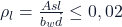 |  |
| Minimum |  (6.3N) |  (8.20) |
| When no calculation is needed | Not defined |  (8.2.1(1)a) |
| Minimum shear reinforcement | Always required (6.2.1(4), 9.2.2), except in slabs and members of minor importance | May be required (Clause 12); always for linear members in statically determinate structures with d > 500 mm (8.2.1(2)) |
Worked example
Our reference beam gives  kN in G1 and 56.6 kN in G2 (−9.3%), while the minimum resistance goes up by 26%.
Input:  ,
 ,
 ,
 (C25/30), 3Ø20 tension steel (
 ,
 ), B500 (
 ),
 , .
| G1 (6.2.2) | G2 (8.2.2) |  |
|---|---|---|
 |   | |
 |  | |
 |  | |
 |  | |
 |  | -9,3% |
 |  | +26% |
|  | -9.3% |
The two stresses are almost the same (0,594 vs 0,599 MPa). The difference comes from the lever arm: G2 multiplies the stress by 0,9d, G1 by d.
What it means in practice
For a typical beam you can expect 5 to 10% less shear resistance without shear reinforcement under G2, so some members that passed without links in G1 will now need them.
For a typical beam you can expect 5 to 10% less shear resistance without shear reinforcement under G2, so some members that passed without links in G1 will now need them.
Depth. G2 compared with G1 ( %,
 mm): +16% at
 mm, −9% at 350 mm, −13% at 500 mm, −19% at 800 mm and −22% at 1000 mm. The size effect is stronger than for deep members, so check them first. Above
 mm, minimum shear reinforcement is also mandatory in statically determinate linear members.
Reinforcement ratio. G2 compared with G1 ( mm, mm): +24% at
 % and +5% at 0.5%, where the new minimum governs. From
 % up to the 2% cap of G1 the difference is −9%, and it is +4% at
 %, where the G1 cap applies. Slabs and lightly reinforced members can therefore come out better than before.
Aggregate.  is now a calculation input. In our example
 mm gives 58.9 kN (−5.7% compared with G1) and
 mm (
 mm, the cap) gives 61.0 kN (−2.3%). State the aggregate size in the concrete specification and keep it consistent with the calculation.
- Steel grade: contains , so a higher steel grade lowers the minimum slightly.
- Loads near supports: check the shear span
 . When it is below
 , G2 replaces
 by
 , which is a different route from the G1 reduction
 .
- National Annex: is an NDP value, so check your National Annex before using the numbers in this article for a project.
Try it in Diamonds
Diamonds is BuildSoft’s 3D FEM structural analysis software, and you can learn it in under an hour. Start your free 30-day trial at buildsoft.eu.
Sources
Sources: EN 1992-1-1:2004, 6.2.1, 6.2.2 and 9.2.2; EN 1992-1-1:2023, Table 4.3, 8.2.1 and 8.2.2.

